





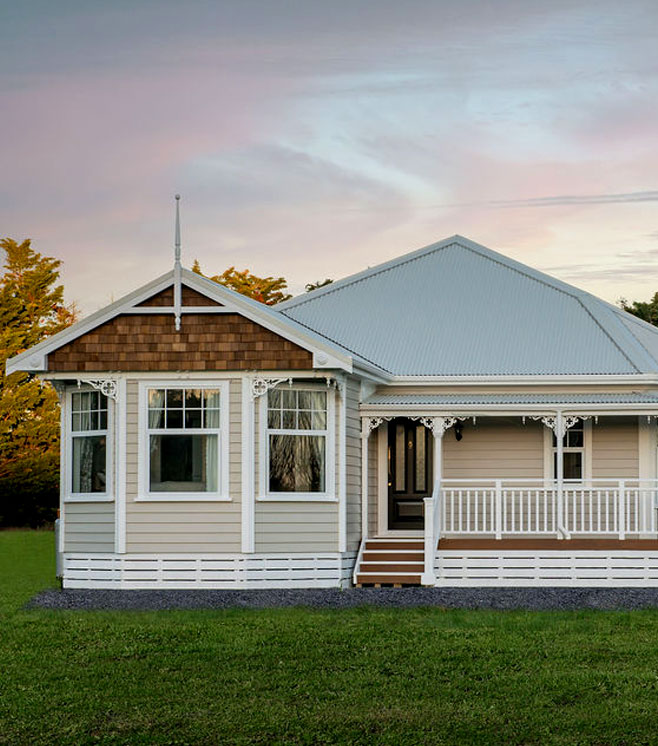
Windows are where a character home is won or lost. The vertical rhythm of tall, evenly spaced openings is the first thing the eye reads, and it is also one of the largest single line items in the build.
Three decisions sit inside it: the window type your era calls for, the frame material, and the glazing performance the Building Code now requires. They interact, and getting the order right saves money.
Sash or casement: what your era calls for
The window type is set by the style, not by preference:
- Villa — double-hung sash. Tall, vertical, sliding up and down, usually with a bay window on the street elevation. This is the villa signature.
- Bungalow — casement. Side-hinged and swinging outward, often in banks, frequently with fanlights or leadlight detail above.
Mixing the two vocabularies is the most common character-build error. If you are still choosing between the eras, see villa vs bungalow.
Frame materials compared
| Option | Authenticity | Trade-offs |
|---|---|---|
| Timber joinery | Highest — the real thing, with correct sightlines | The most expensive option and the longest lead time; needs painting maintenance |
| Timber-look aluminium | Good, especially at street distance | Lower maintenance and cost; sightlines are heavier than true timber |
| Standard aluminium | Lowest — reads modern unless carefully detailed | Cheapest and most available; best kept to rear and service elevations |
The budget strategy that works: true timber on the street elevation, simpler joinery at the rear. Visitors and valuers meet the front of the house, and that is where sightlines are read closely. It is the same logic set out in building a character home on a budget.
What the insulation rules require of glazing
This is the part that has changed most. Under the current H1 requirements, windows and doors must reach R0.37, rising to R0.46–R0.50 in the colder climate zones (Building Performance). Those levels are beyond single glazing, so double glazing is standard on new builds, and colder zones generally need higher-performing frames and glass again.
For a character home this is good news badly disguised: the era's tall windows are now double glazed and thermally sound, so the look survives without the cold that came with the originals — the subject of are character homes cold. In high-wind areas the joinery also has to be specified for the wind zone, which matters for large or exposed openings in places like Wellington.
Where the detail actually shows
- Sightlines. The visible width of the frame and glazing bars. Heavier sightlines are the usual giveaway on a modern reproduction.
- Proportion. Tall and narrow, not square. A correctly proportioned aluminium window reads better than a badly proportioned timber one.
- Rhythm. Even spacing across the street elevation. One misplaced opening undoes the whole front.
- The bay window. On a villa it is the jewellery, and it is worth protecting from value engineering.
Frequently asked questions
What windows suit a villa versus a bungalow?
Villas use double-hung sash windows — tall, vertical, sliding up and down, usually with a bay window on the street elevation. Bungalows use casements, side-hinged and opening outward, often in banks with fanlights or leadlight above. Mixing the two is the most common character-build error.
Should I use timber or aluminium joinery on a character home?
Timber gives the most authentic sightlines and costs the most; timber-look aluminium is a good compromise at street distance with lower maintenance; standard aluminium is cheapest but reads modern. A common approach is true timber on the street elevation and simpler joinery at the rear, where sightlines are not read closely.
Do character home windows have to be double glazed?
In practice, yes. Current H1 requirements set window and door R-values at R0.37, rising to R0.46–R0.50 in colder climate zones, and those levels cannot be met with single glazing. Colder southern and inland zones generally need higher-performing frames and glazing again.
What makes a reproduction window look wrong?
Sightlines and proportion. Heavy frame and glazing-bar widths are the usual giveaway, and square openings where the era called for tall narrow ones break the look entirely. A well-proportioned window in a cheaper material reads better than a poorly proportioned one in timber.
Do windows need to be specified for wind zones?
Yes. Joinery must be specified for the site's wind zone under NZS 3604, and that matters most for large or exposed openings. In higher wind zones — common around Wellington and exposed coastal sites — bracing, fixings and joinery specification all step up.
Talk to us about specifying your build
Prefer to talk? Call Heritage Homes on 0508 40 30 20 or email sales@hhomes.nz.